
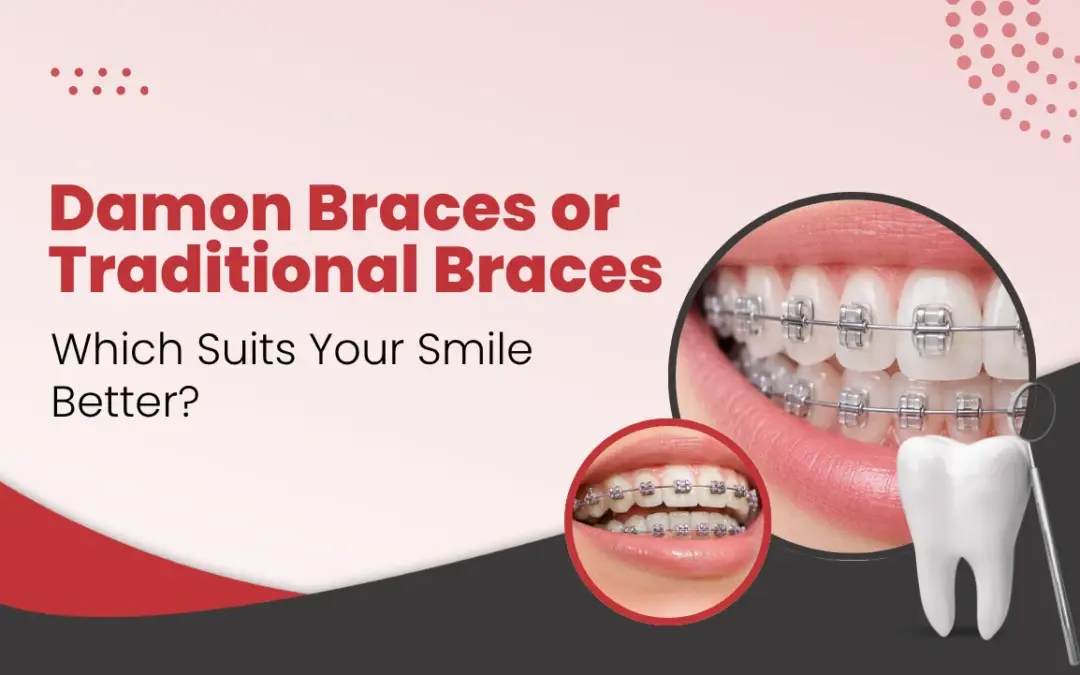
Choosing between the two isn’t as simple as picking whichever sounds newer. Damon braces skip the elastic ties that traditional metal braces depend on, and that one change affects comfort, how often you’re back in the chair, and how the wire actually moves your teeth. Traditional braces still do the job well, especially for tougher alignment cases where budget matters too. Not always a clean choice, honestly. It comes down to your bite, what you’re willing to spend, and how much the look of metal bothers you day to day.
According to Prof. (Dr.) Vineet Golchha, a trusted dentist in Sector 116 Noida, “Patients ask me all the time which braces move teeth faster. Depends on the case, really. Damon brackets cut down friction and, for a lot of patients, mean fewer visits. But when the bite correction gets complicated, traditional braces still hold their own.”
What Makes Damon Braces Different From Traditional Braces?
Both systems straighten teeth. Where they split apart is in how the wire gets held in place.
|
Feature |
Damon Braces |
Traditional Braces |
|
Ligation type |
Self-ligating, no elastic ties |
Elastic ties hold the wire |
|
Friction |
Lower friction, smoother movement |
More friction between wire and bracket |
|
Adjustment visits |
Fewer visits typically needed |
Regular tightening appointments required |
|
Treatment time |
Similar for most cases, per clinical data |
Similar for most cases, per clinical data |
|
Cost |
Usually higher upfront |
Generally more budget-friendly |
Self-ligating mechanism: Damon brackets rely on a sliding door instead of elastic bands. Less friction. Often, less discomfort too.
Fewer adjustment visits: Traditional braces call for regular tightening appointments. Damon systems can stretch those visits further apart.
Hygiene difference: Fewer moving parts on the bracket, so less plaque tends to build up around the wire.
Cost consideration: Traditional braces are the more affordable route for most people. Damon costs more because you’re paying for the technology.
Want to know which system suits your case? Explore our braces treatment options at WiseDent.
Which Braces Work Better for Complex Alignment Cases?
Not every case is a simple fix. And that’s exactly what tips the scale one way or the other.
Severe crowding or rotation: Traditional braces give the orthodontist more direct control when teeth need heavy repositioning.
Bite correction needs: Both systems manage bite issues fine, but the tougher cases still lean towards traditional more often than not.
Treatment predictability: Metal braces carry decades of clinical history behind them. Damon’s numbers are solid, just newer.
Patient comfort priorities: Comfort and fewer visits matter most to you? Damon usually wins that argument. So really, it comes down to what you value.
Planning complete smile care beyond alignment? Here’s a look at your tooth replacement options for missing teeth.
Wondering whether Damon or traditional braces are the better fit for your bite? An orthodontic consultation will tell you which one suits your case.
Why Choose Dr. Vineet Golchha for Braces Treatment in Noida?
Dr. Vineet Golchha has spent over 18 years correcting bites and aligning smiles in Noida. His fellowship training, combined with more than 2000 treated braces and aligner cases, gives him a clinically grounded sense of which system suits which case, beyond textbook protocol. He also serves as a professor of orthodontics at Inderprastha Dental College, keeping his approach informed by current research. Supported by a team well versed in evolving orthodontic techniques, he brings both experience and updated clinical knowledge to every case. This combination is why patients across Sector 116 trust his judgment on which braces system to recommend.
Selecting the right braces system matters more than following current trends. Every patient begins with a 3D digital scan, so the choice between Damon and traditional braces is based on clinical assessment, not guesswork. Dr. Golchha weighs crowding severity, bite type, budget, and aesthetic preference before recommending either option, ensuring the treatment plan fits the case in front of him rather than a one-size-fits-all approach.
Frequently Asked Questions
Are Damon braces faster than traditional braces?
Often, for straightforward cases. Complex bites can still vary a lot.
Do Damon braces cost more than traditional braces?
Usually. The self-ligating design adds to what you’ll pay.
Are traditional braces still effective for severe misalignment?
Yes. They’re still a strong, well-proven pick for complex cases.
Which braces need fewer dental visits?
Damon braces typically need fewer adjustment visits than traditional braces.
References:
Disclaimer: This blog is for general educational purposes only and is not a substitute for professional dental diagnosis; please consult a qualified dentist for personalised advice.