
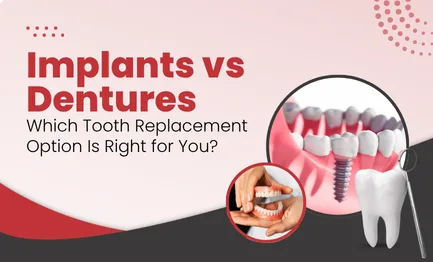
At Wise Dent in Noida, Professor (Dr) Vineet Golchha provides personalized treatment plans to help patients restore both the function and appearance of their smiles. This guide will help you understand the differences between dental implants and dentures so you can make an informed decision.
Why Replacing Missing Teeth Is Important
Many people think replacing a missing tooth is only about improving appearance, but it also plays an important role in maintaining good oral health.
When a tooth is lost, the jawbone beneath it gradually begins to shrink because it no longer receives stimulation from the tooth root. Over time, this can change your facial appearance and make neighbouring teeth shift into the space. Missing teeth may also make chewing difficult, affect speech, and increase the risk of bite problems.
Replacing missing teeth at the right time helps preserve your jawbone, keeps surrounding teeth properly aligned, and restores your ability to eat and speak comfortably. It also improves confidence by giving you a complete, natural-looking smile.
If several teeth are missing, treatments such as Full Mouth Rehabilitation or a personalized Smile Makeover may also be recommended to restore both function and aesthetics.
What Are Dental Implants?
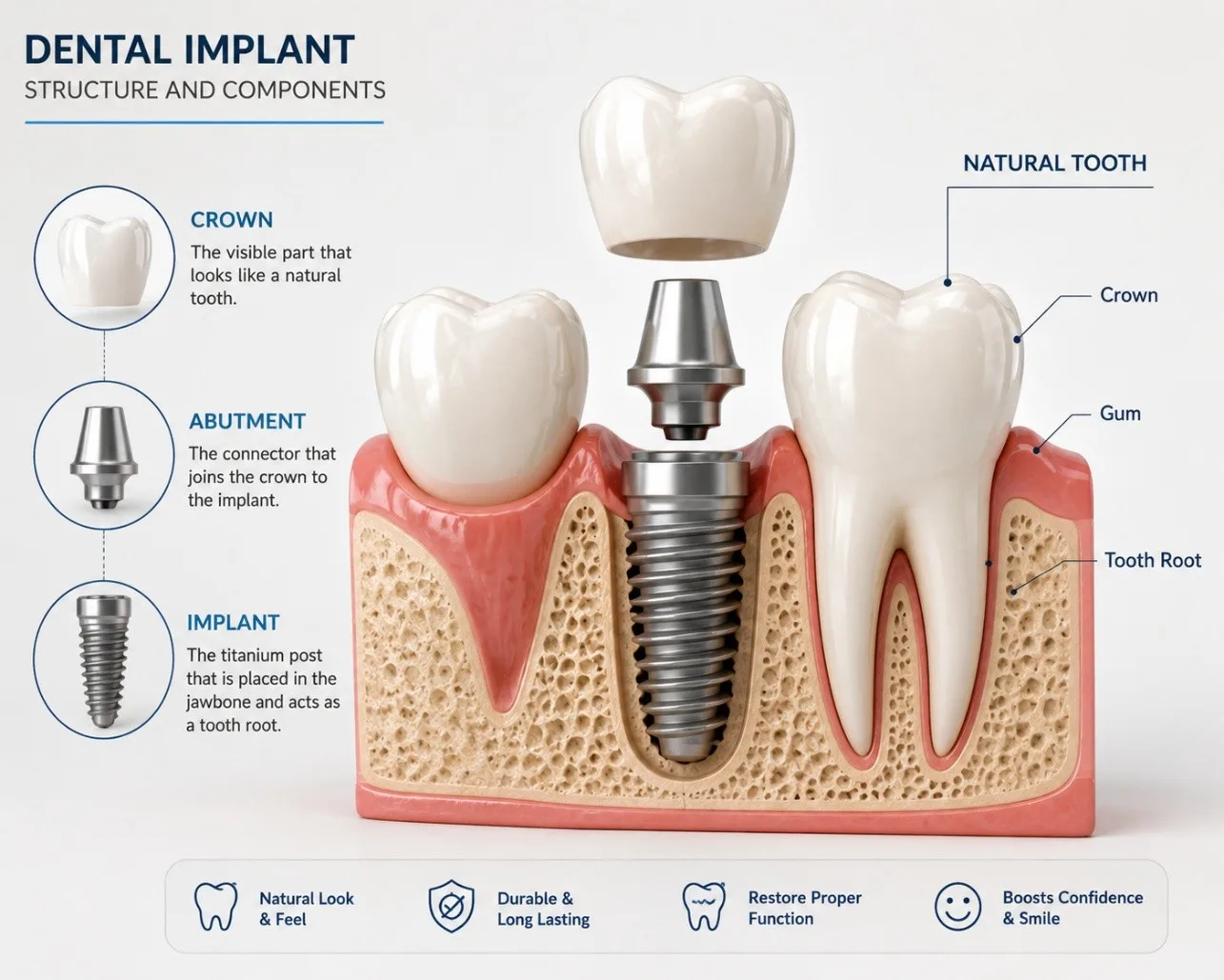
Dental implants are a long-lasting solution for replacing missing teeth. A small titanium post is placed into the jawbone to act as an artificial tooth root, and once it heals, a custom-made crown is attached to restore the appearance and function of a natural tooth.
Dental implants are stable, comfortable, and allow you to eat, speak, and smile with confidence. They are best suited for people with healthy gums and adequate jawbone support. With good oral hygiene and regular dental check-ups, dental implants can last for many years.
Book a consultation with Professor (Dr) Vineet Golchha at Wise Dent to find out whether dental implants or dentures are the right choice for restoring your smile.
What Are Dentures?
Dentures are removable appliances designed to replace one or more missing teeth. They are available as full dentures, which replace all the teeth in the upper or lower jaw, or partial dentures, which replace a few missing teeth while fitting around the remaining natural teeth.
Modern dentures are designed to look more natural and provide greater comfort than ever before. They offer an affordable and quicker solution for people who may not be suitable candidates for dental implants or who prefer a non-surgical treatment option.
Although dentures restore your smile and improve chewing ability, they require regular cleaning and may need adjustments over time as the shape of your jaw changes.
Dental Implants vs Dentures: Key Differences
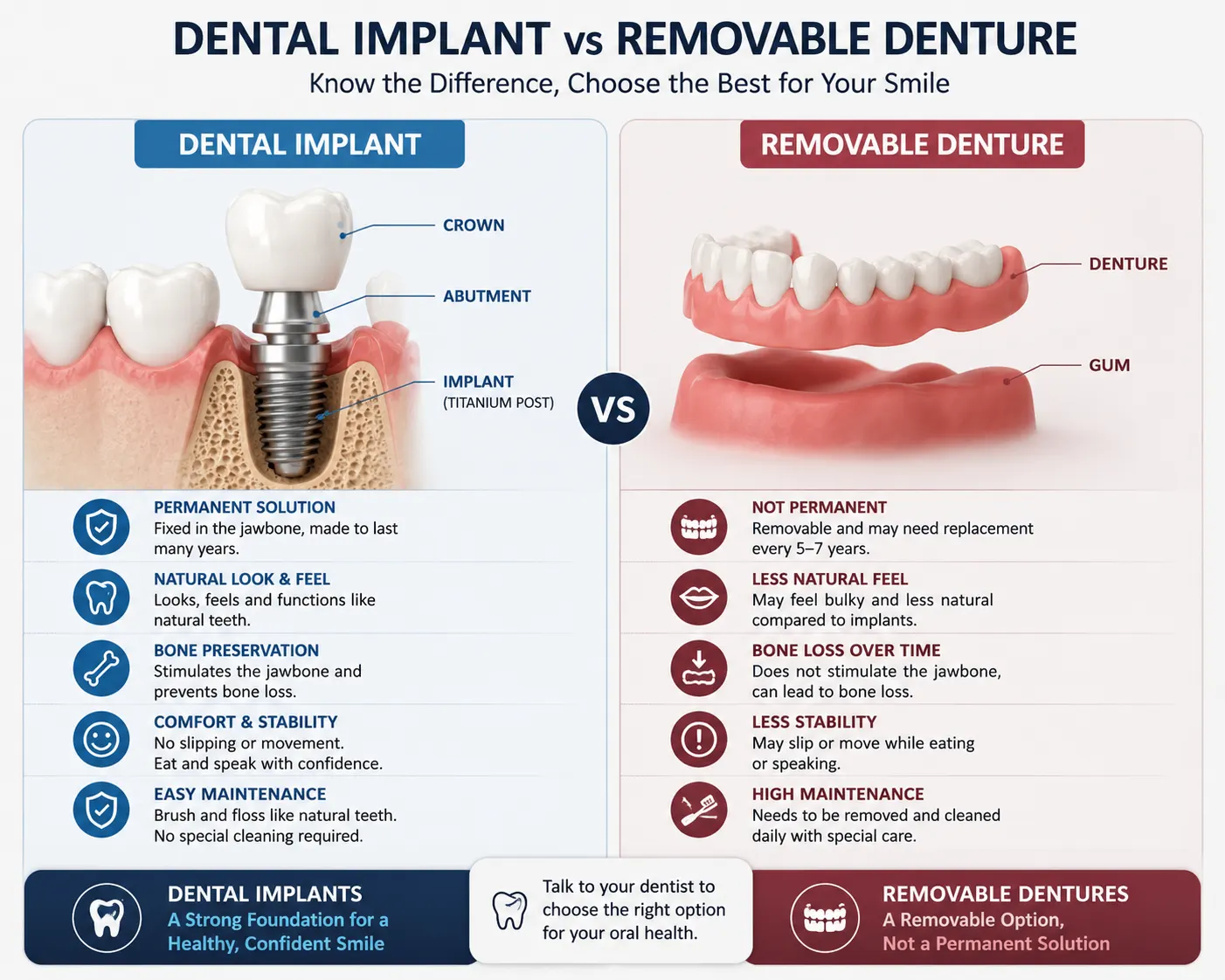
Both dental implants and dentures are effective options for replacing missing teeth, but they differ in terms of comfort, durability, maintenance, and cost. Understanding these differences can help you choose the treatment that best suits your needs.
| Feature | Dental Implants | Dentures |
| Stability | Fixed securely in the jawbone | Removable and may shift while eating or speaking |
| Appearance | Looks and feels like natural teeth | Natural-looking, but may not feel the same |
| Comfort | Comfortable after healing | May require time to adjust |
| Bone Preservation | Helps preserve the jawbone | Does not prevent bone loss |
| Lifespan | Can last 15–25 years or longer with proper care | Usually lasts 5–10 years before replacement or adjustment |
| Maintenance | Brush and floss like natural teeth | Requires daily cleaning and soaking |
| Cost | Higher initial investment | More affordable upfront |
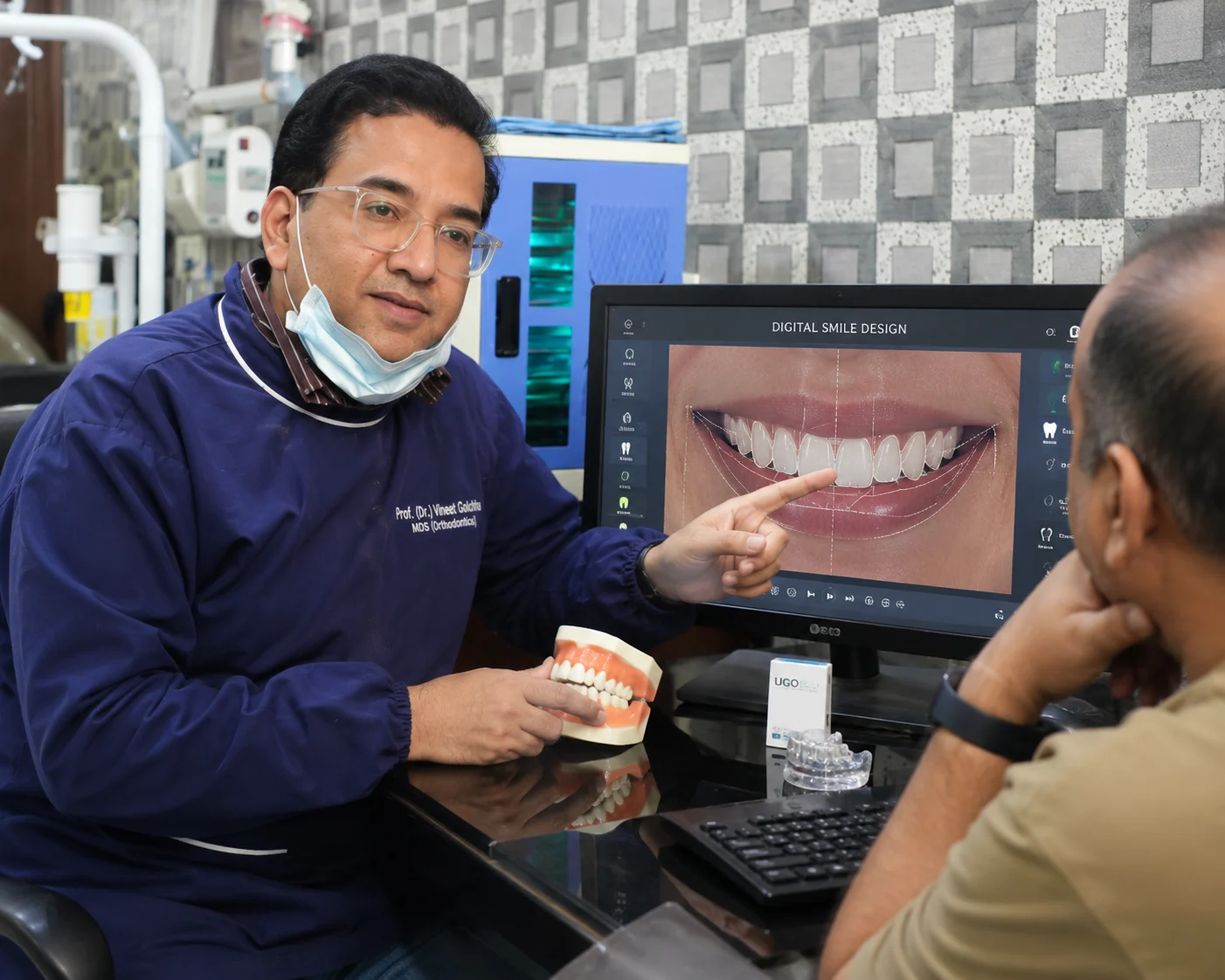
“There isn’t a single solution that’s right for everyone. After a detailed examination, we recommend the treatment that best matches your oral health, lifestyle, and long-term goals.”
— Professor (Dr) Vineet Golchha
Which Tooth Replacement Option Is Right for You?
The best option depends on your oral health, lifestyle, and treatment goals.
Choose dental implants if you:
- Have healthy gums and good jawbone support.
- Want a permanent solution.
- Prefer teeth that look and feel natural.
Choose dentures if you:
- Have multiple missing teeth.
- Want a more affordable, non-surgical option.
- Have significant bone loss.
A consultation with Professor (Dr) Vineet Golchha can help determine the most suitable tooth replacement option for your smile.
Advanced Tooth Replacement Solutions at Wise Dent
Whether you need a dental implant to replace a missing tooth or Full Mouth Rehabilitation for multiple missing teeth, every treatment is planned with long-term oral health in mind. If required, supporting treatments such as Gum Disease Treatment or Oral Surgery may also be recommended to improve treatment outcomes and ensure a healthy foundation for your new smile.
“Replacing missing teeth is about more than restoring your smile. It also improves chewing, supports jawbone health, and helps maintain overall oral function for years to come.”
— Professor (Dr) Vineet Golchha
Book a consultation and explore whether dental implants or dentures are right for you.
Conclusion
Both dental implants and dentures are effective ways to replace missing teeth, but the best option depends on your individual needs. A consultation with Professor (Dr) Vineet Golchha at Wise Dent can help you choose the right treatment and restore your smile with confidence.
Frequently Asked Questions
1. Are dental implants better than dentures?
2. How long do dental implants last?
3. Do dentures look natural?
4. Can everyone get dental implants?
5. How do I choose between dental implants and dentures?
Disclaimer
This article is for informational purposes only and should not be considered a substitute for professional dental advice, diagnosis, or treatment. Please consult Professor (Dr) Vineet Golchha at Wise Dent for a comprehensive evaluation and personalized tooth replacement plan.