

Molars do most of the heavy lifting when you chew, and that’s exactly why they’re the teeth most likely to need a root canal. They have more roots, more canals, and sit further back which means decay often goes unnoticed longer before it reaches the nerve. By the time pain shows up, the infection is usually already inside the pulp. Here’s what actually happens during a molar root canal, step by step, at Wisedent Dental Clinic in Noida and why the process differs slightly from treating a front tooth.
Why Molars Are More Prone to Needing a Root Canal
Molars carry a structural disadvantage most patients don’t think about until it’s a problem.
- Deep grooves on the chewing surface trap food and bacteria easily, raising the risk of tooth decay and cavities
- More canals per tooth molars typically have 2–4, versus one in most front teeth means more places for infection to take hold
- Harder to clean thoroughly with a toothbrush alone, especially the back-most molars
- More prone to cracks from grinding or chewing hard foods, often unnoticed until decay sets in
- Old fillings fail more often, letting bacteria back in and triggering reinfection
This is why molars account for a larger share of root canal treatment cases than any other tooth type.

Persistent tooth pain is your body’s warning sign. Don’t ignore it. Sharp pain, prolonged sensitivity, swelling, or a bump on the gums may indicate a tooth abscess (a pus-filled infection that needs prompt dental treatment). Early root canal treatment can save your natural tooth and prevent infection from spreading.
Is That Back Tooth Pain Getting Worse When You Bite Down?
Molars often hide infection longer than front teeth simply because they’re harder to check on your own. A quick X-ray can confirm whether it’s decaying, a crack, or something already inside the pulp.
Step-by-Step: The Molar Root Canal Procedure

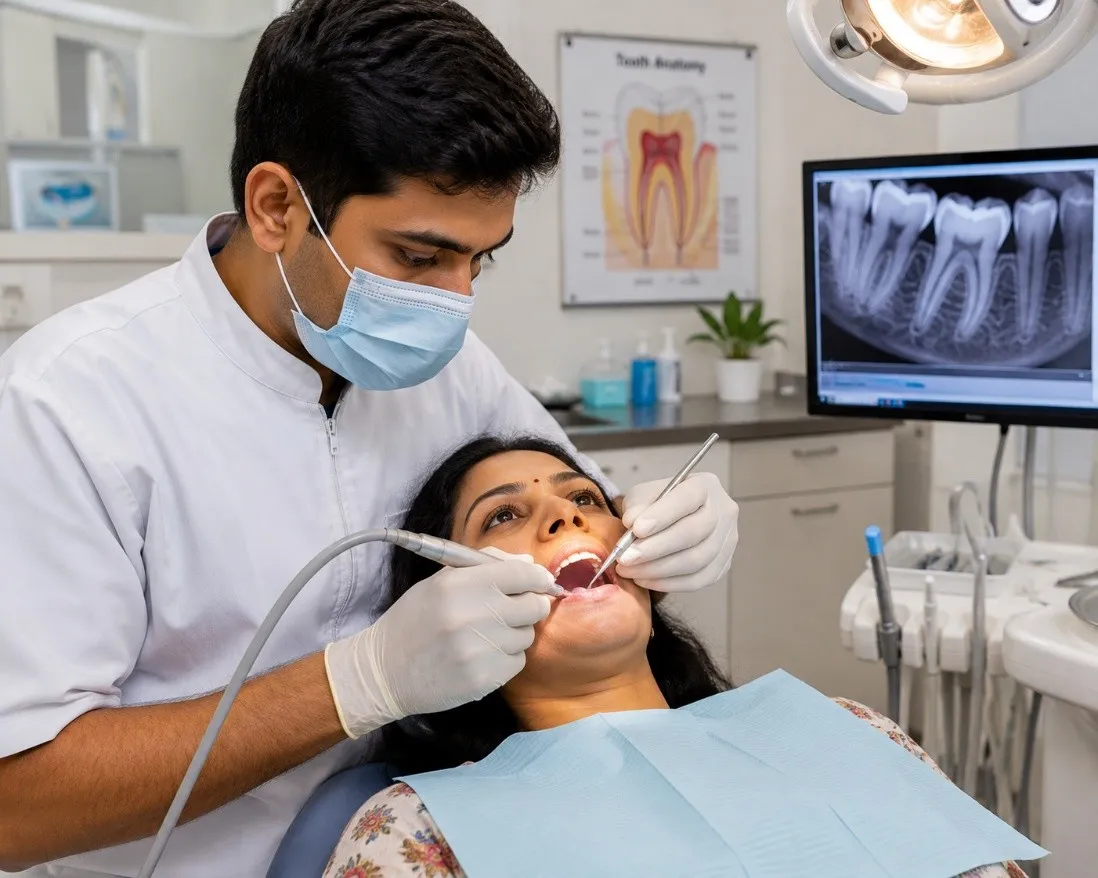
A molar root canal is a step-by-step procedure that removes infection from each canal, cleans and disinfects the tooth, and seals it to prevent reinfection. Because molars have multiple canals, treatment requires extra precision. A dental crown is usually placed afterward to restore strength and protect the tooth for long-term chewing.
“A molar root canal isn’t something to rush. We make sure every canal is mapped on the X-ray first, so by the time we start, there are no surprises in mid-procedure.”
— Prof. (Dr.) Vineet Golchha, Wisedent Dental Clinic

Molar Root Canal vs Front Tooth Root Canal What's Different
Patients are often surprised that the two aren’t quite the same procedure.
- Number of canals: front teeth usually have one canal; molars can have three or four, sometimes with curved or hidden extra canals
- Time required: molar cases often need a longer sitting, or occasionally a second visit, due to the added canals
- Restoration afterward: front teeth can sometimes get by with a filling; molars almost always need a crown given the chewing load they carry
- Difficulty of access: molars sit further back, which makes visibility and instrument access more demanding this is where a microscope often makes a real difference
None of this makes a molar root canal riskier it just means the procedure calls for more careful mapping before treatment starts.

Recovery & Aftercare for a Molar Root Canal
- Mild soreness for 1–2 days is normal, especially around the gum near the treated tooth
- Avoid chewing on that side until the permanent crown is placed
- Over-the-counter pain relief is usually sufficient
- Softer foods for the first day or two make a real difference in comfort
- Continue brushing and flossing as usual — the treated tooth still needs regular care
Pain that worsens after the second day, ongoing swelling, or fever isn’t normal recovery — that needs a follow-up call, not waiting it out.
Why Choose Wisedent Dental Clinic for Molar Root Canal Treatment
-
Molar cases are technically more demanding than front-tooth root canals, which is exactly were equipment and process matter most.
- Digital X-ray mapping before any procedure begins, so every canal is accounted for.
- Microscopic precision for molars with narrow, curved, or hard-to-locate canals.
- Crown placement handled in-house, so there’s no gap between root canal and final restoration.
- Same-clinic access to related care from root canal treatment to dental implants and orthodontic treatment, your full dental history stays with one team rather than being split across providers.
Not Sure If Your Case Needs a Specialist’s Eye?
Molar cases with narrow or curved canals are easy to undertreat without the right equipment. A proper diagnostic scan tells you exactly what precision the case actually calls for.
Frequently Asked Questions
How many canals does a molar tooth have?
Most molars have 2 to 4 root canals, depending on the tooth’s position in the jaw — more canals than any other tooth type.
Is a molar root canal more painful than a front tooth root canal?
No with proper local anaesthesia, both feel similar, though molar root canal treatment can take longer due to the extra canals.
How many sittings does a molar root canal take?
Usually one to two visits, depending on infection severity and how complex the canal structure is.
Can a molar root canal fail?
It’s uncommon, but reinfection can occur if a canal is missed or the crown seal weakens over time regular dental check-ups catch this early.
Should I get a crown after a molar root canal?
Yes molars bear heavy chewing force, and a dental crown protects the tooth from cracking afterward.