
Painless Root Canal Treatment in Noida

Tooth pain doesn’t stay in one place it disrupts eating, talking, even sleeping. In most cases we see like this trace back to the same cause: decay or infection has reached the inner pulp of the tooth. Left untreated, that infection spreads, and the tooth itself is at risk. A root canal is how we save the tooth and clear the infection without pulling it out. Here’s what Painless root canal treatment at Wisedent Dental Clinic in Noida involves, and when you genuinely need one.
Signs You May Need Root Canal Treatment
A root canal isn’t something we recommend at the first sign of a toothache. But there are patterns we look for that usually point to infected or inflamed pulp the soft tissue inside your tooth.
Sharp pain when biting down or chewing, especially on one specific tooth
Lingering sensitivity to hot or cold that doesn’t fade in a few seconds
A small pimple-like bump on the gum near the tooth
Swelling or tenderness in the gums around a single tooth
A tooth that’s darkened or greyed compared to the ones next to it
Pain that wakes you up at night this is the one I take most seriously
Not Sure If That Toothache Needs More Than a Filling?
Persistent pain or sensitivity often means the infection has already reached the inner pulp. Getting it checked early usually means a simpler, less invasive treatment.
Types of Root Canal Treatment
Provided at Wisedent Dental Clinic
Not every root canal looks the same under the drill. Depending on how the tooth presents, we choose from:
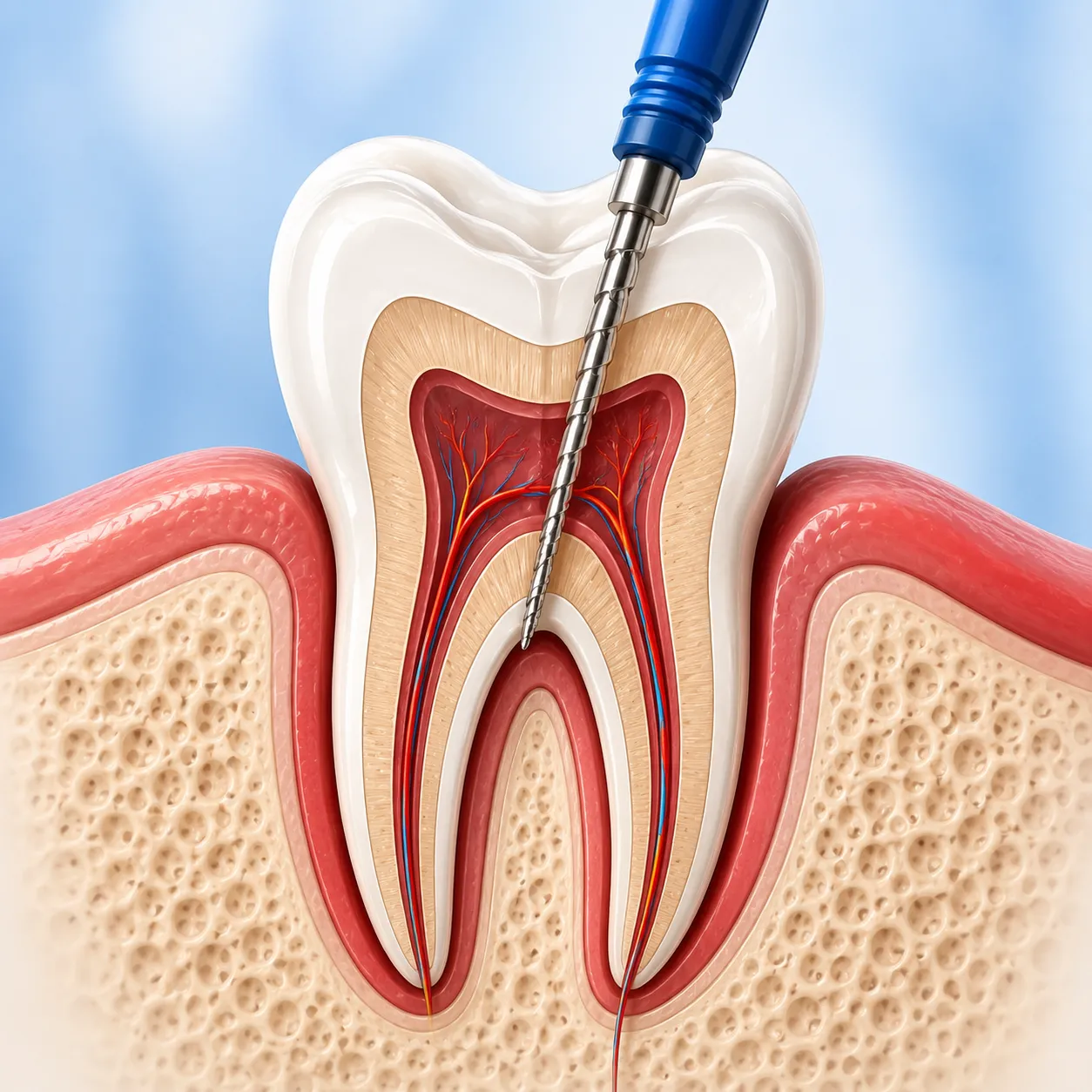
Conventional Root Canal Treatment:
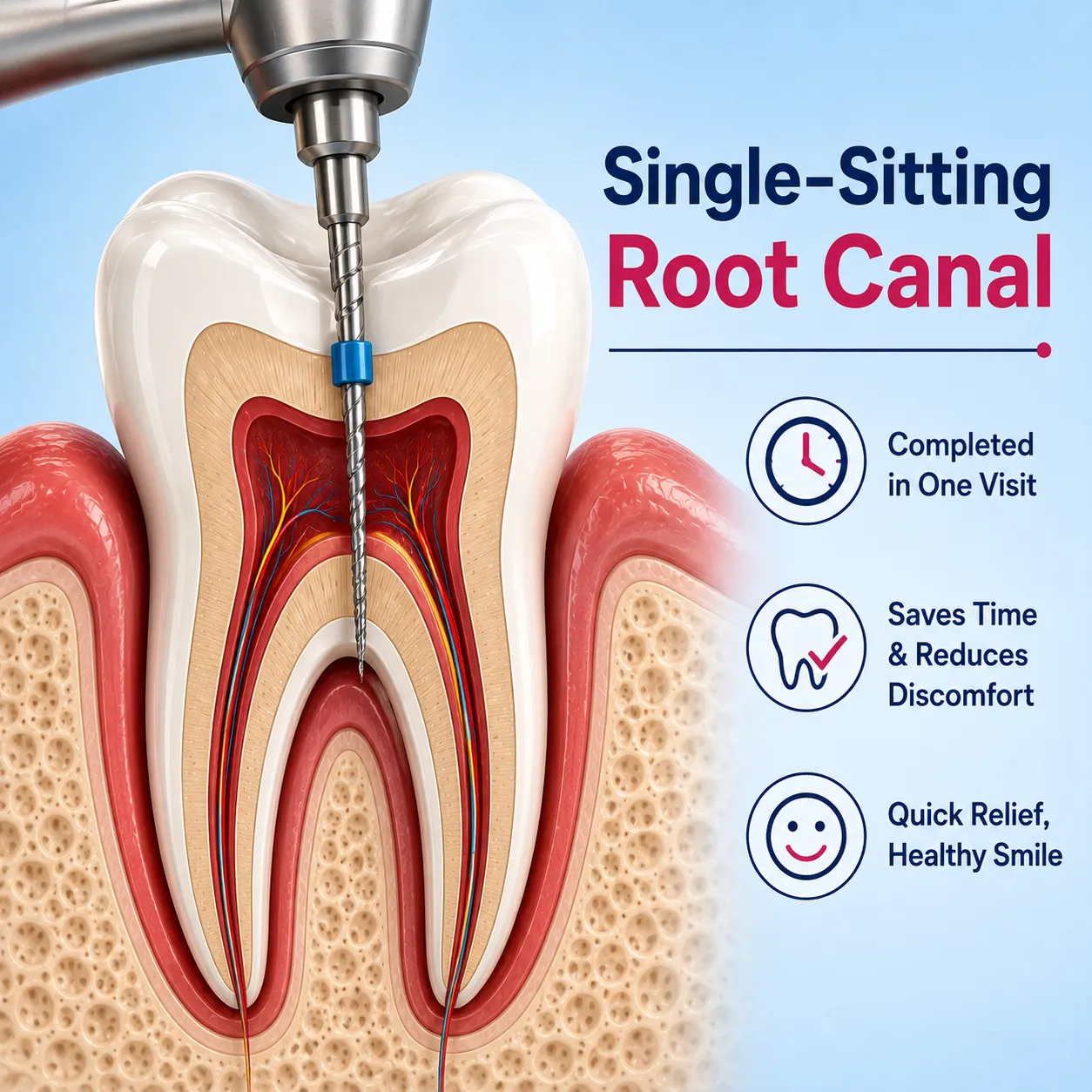
Single-Sitting Root Canal:
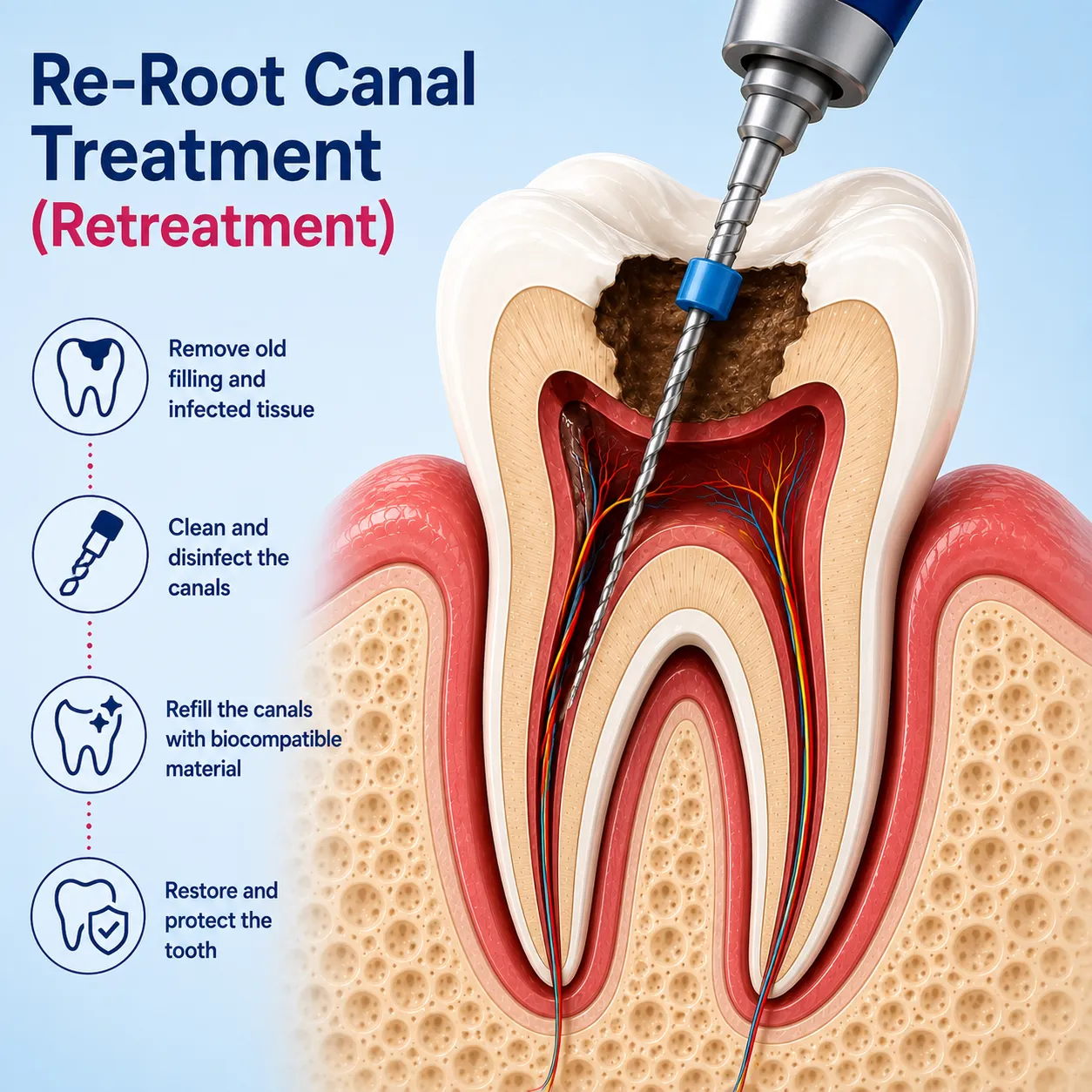
Re-Root Canal Treatment (Retreatment):
for a tooth that had a root canal years ago and has become reinfected or was incompletely treated the first time
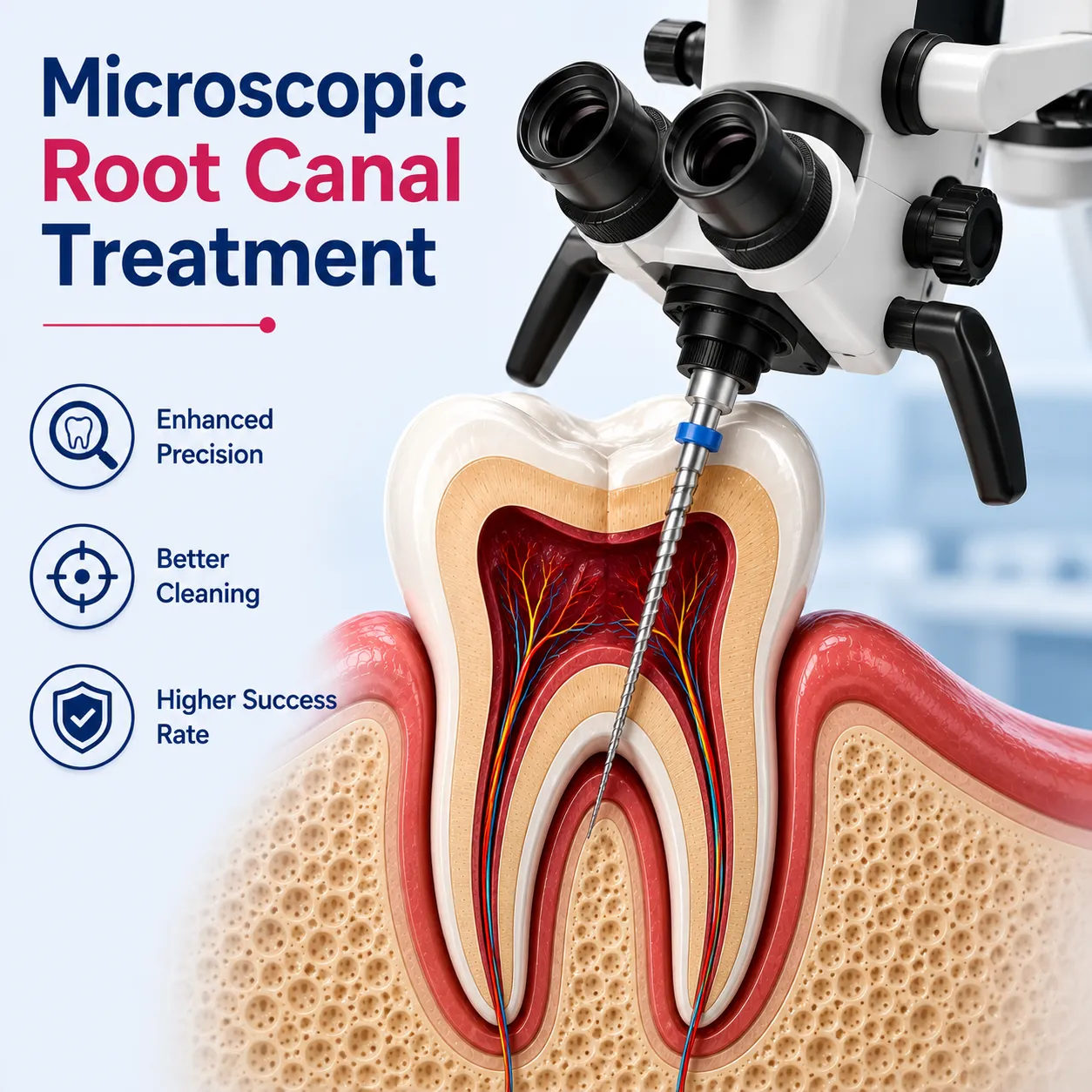
Microscopic Root Canal Treatment:

Painless Root Canal Treatment:
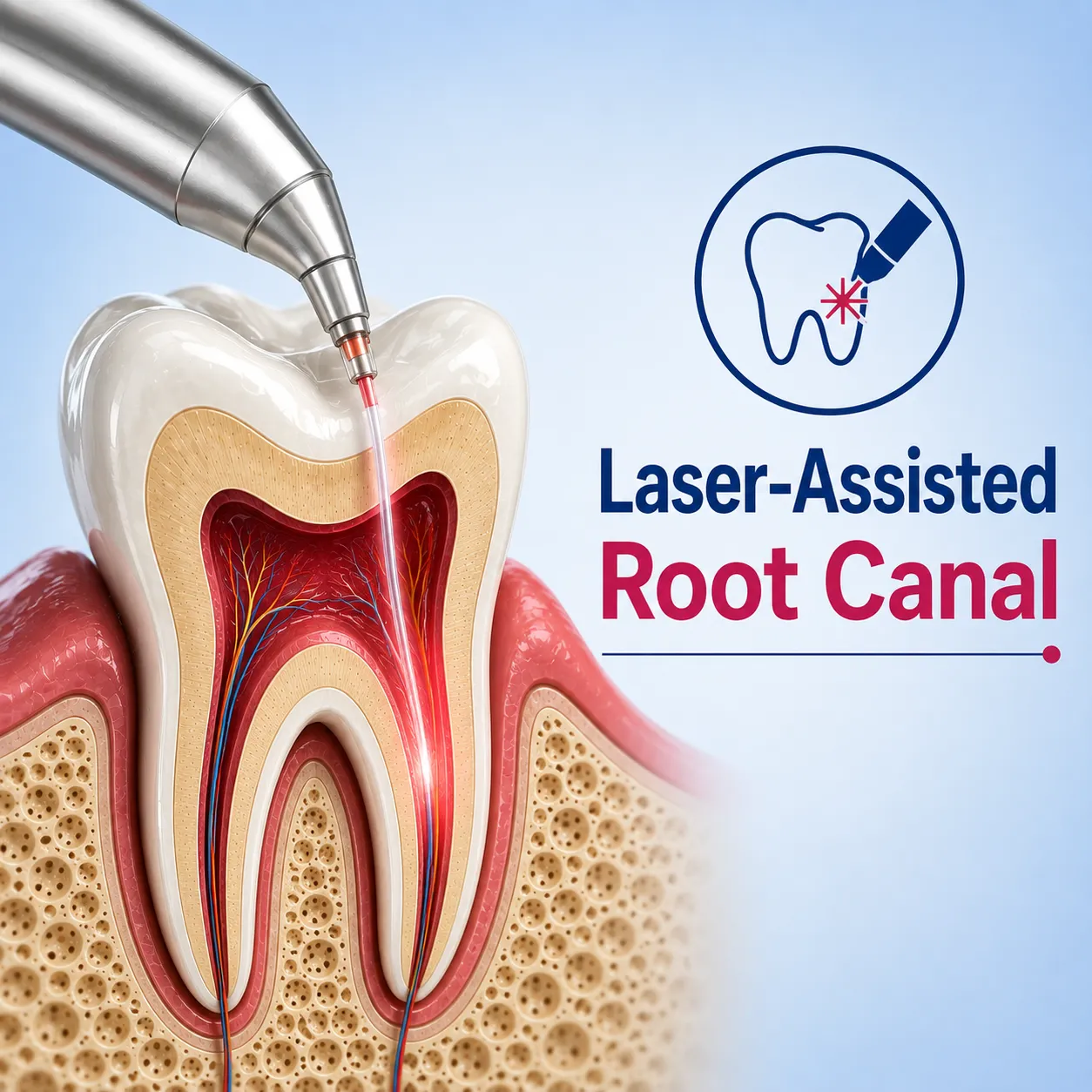
Laser-Assisted Root Canal:
Which one you need depends on your X-ray and how the tooth responds during examination not every case fits neatly into one category.
“Every root canal case starts with a full X-ray review in this clinic. I want to know exactly what I’m dealing with before any instrument touches the tooth.” — Prof. (Dr.) Vineet Golchha, Wisedent Dental Clinic
Our Approach & Procedure
Diagnosis with a digital X-ray to map the canal’s shape and check for bone involvement
Local anaesthesia you’ll feel pressure, not pain
Removing the infected or inflamed pulp tissue
Filling and sealing it with a biocompatible material
A crown or filling to restore the tooth’s strength for chewing
Most patients are in and out within 45 minutes to an hour per sitting, and back to work the same day.

What to Expect After Your Root Canal
(Recovery & Aftercare)
Filling and sealing it with a biocompatible material

The tooth will feel a little different for a while a bit more sensitive to pressure and that settles down as healing completes. It doesn’t mean something went wrong.
Why Choose Wisedent Dental Clinic for Root Canal Treatment in Noida?
Root canals fail more often from rushed technique than from the procedure itself. Here’s what sets our approach apart:
Specialized in Failed & Complex Root Canal Cases:
Advanced Microscopic & Laser-Assisted Techniques:
High-Quality Materials & Long-Lasting Restorations:
Single-Sitting & Painless Root Canal Treatment:
Strict Sterilization & Hygiene Protocols:

Led by Prof. (Dr.) Vineet Golchha
Strict Sterilization & Hygiene Protocols:
Best Orthodontist Noida Award, 2017
Best Orthodontic Department Award, 2018
2000+ cases treated with braces and aligners, 5000+ happy clients
“A root canal shouldn’t need to be redone in two years. That’s why we invest in microscopic precision and strict sterilization it’s the difference between a filling that lasts and one that fails quietly.” — Prof. (Dr.) Vineet Golchha,
Already Had a Root Canal That Didn’t Hold Up?